Corporate History

The Story of Brother

The transformation of Brother from humble beginnings into a diversified multinational high-tech corporation would not have been possible were it not for its rich history of strong leadership and product innovation.

Click on the following to find out more about Brother's history

1. Spirit of Establishment 4. Mechatronics Era 6. Global Vision 21
2. Sewing Machine Era 5. Network & Contents 7. Milestones
3. Diversification Era    

1. Spirit of Establishment

Yasui Sewing Machine Co., a company that sold and repaired sewing machines, was established in 1908 by Kanekichi Yasui, the father of the founders of Brother Industries, Ltd.

Masayoshi Yasui, the eldest of ten children, began working and helping his father at the age of nine, thereby acquiring sewing machine repair skills at a very young age. At the age of 17, Masayoshi began working as an apprentice in Osaka, which at that time was the heart of Japan's sewing machine industry. Having witnessed the sewing machine market being dominated by imported products, Masayoshi felt strongly the need to produce sewing machines domestically. He was determined to “develop this import-based sewing machine industry into an export-based industry.”

At that time it was considered impossible to produce sewing machines in Japan, due to a lack of production facilities and advanced processing technologies. However, Masayoshi's resolution never wavered. He managed to obtain funds for the production of sewing machines and started developing and selling hydraulic presses that produce straw hats. He also embarked on research activities focused on his ambition – to manufacture sewing machines in Japan.

Jitsuichi Yasui, Masayoshi's younger brother and co-founder of Brother, succeeded in the development of shuttle hooks, which are main components of the sewing machine. Very few believed they would succeed, however, and it was only through determination and a seemingly endless ability to overcome adversity that the Yasui brothers succeeded in 1932 with the introduction of the first domestic sewing machine ever made entirely in Japan.

“Superior quality and diligent service” was Brother's motto. It meant that the production of quality products is of optimal service to society, and is key to the company's continued prosperity. As expressed in this motto, commitment to quality is in Brother's “DNA” which to this very day is passed down to every Brother employee.

The Brother Global Charter, in defining the Brother group's basic policies for the new era, includes “commitment to quality,” “customer-first” and “care for the environment.”

The Charter's preamble states Brother's responsibility: “Brother Group's mission is to create and quickly deliver superior value to customers through our high quality products and services.”


2. Sewing Machine Era

Produced in 1928 by the Yasui brothers, who sought to produce sewing machines domestically, this was the first chain-stitch sewing machine for producing straw hats. This machine was the first product marketed with the “BROTHER” brand. The “Brother” brand was named after the Yasui brothers’ collaborative effort that realised the production of this sewing machine.

But believe it or not, Brother was not the first idea of the Yasui brothers when they tackled the question of what to call their first own model. Initially, they chose ‘Sister’ as the majority of sewing machine users were women but it turned out that the name was already registered as a sewing machine brand name. Founders Jitsuichi and Masayoshi Yasui went back to the drawing board and due to their strong family ties, they finally came up with the name ‘Brother’, for the obvious reason.

In 1933 a new factory was built in the area that is now the Mizuho Ward, Nagoya City, for mass-production of domestic sewing machines. The next logical step toward mass production was taken on January 15, 1934, when the Yasui Brothers Sewing Machine Shop was liquidated to take the progressive step of incorporating under the name Nippon Sewing Machine Manufacturing Co. It began to manufacture industrial sewing machines in 1936.

In 1941 Brother Sales, Ltd. was established in order to develop a sales network in Japan.

In 1947, at the request of the Japanese government, Brother exported 200 sewing machines to Shanghai. This was the first step in “developing the import-based sewing machine industry into the export-based industry,” which was Brother's ambition since its founding.


3. Diversification Era

Using the technology it has developed through the manufacture of sewing machines, Brother started to diversify into other business fields by beginning production of knitting machines and home electric appliances and experimenting with electronics.

In 1954, in an effort to increase exports, Brother International Corporation was established as an exporting company. With the establishment of a sales base in New York in 1954 and its first European production base in Ireland in 1958, Brother actively promoted internationalisation in advance of other Japanese companies.

Around the same time, the U.S. sales company strongly recommended the production of portable typewriters, emphasising that typewriters were becoming increasingly popular in the U.S. as an office necessity. Through steady effort, the engineering team finally succeeded in developing a low-cost typewriter of higher quality and greater durability than those marketed by their competitors. Brother typewriters were then exported to the U.S., where they soon acquired a reputation for high quality, marking the company's entry into the information and communications equipment field.

In 1961 the Headquarters building was completed in Japan and 1962 saw the corporate name changed from Nippon Sewing Machine Manufacturing Co. to Brother Industries, Ltd. At the 1964 Tokyo Olympic Games, Brother provided 300 typewriters for journalists from abroad, which greatly helped improve recognition of the Brother brand.

By 1971, Brother was making typewriters in more than 20 languages and exporting them to 110 countries around the world. Along with sewing machines, typewriters became the company's flagship export product.


4. Mechatronics Era

From the beginning, Brother has been actively engaged in new-product development, by adding electronics technology to a mechanical base. In 1971, Brother became the first in the world to successfully develop a high-speed dot-matrix printer, an achievement considered to be the origin of today's printing technology. This product, developed jointly with a U.S. venture company, won a high reputation both in Japan and abroad for its innovatively high print speed, as compared to contemporary machines of the time.

In 1980, Brother developed an electronic typewriter (EM-1) for office use that featured daisy wheel printing, using a linear pulse motor. This product acquired an excellent reputation. As an official supplier of the 1984 Los Angeles Olympics, Brother provided 3,000 typewriters, thereby gaining international recognition as the No. 1 typewriter brand.

Following this period, Brother released a unique “Labelling system” product, which used thermal transfer technologies gained through the production of electronic personal printers and Japanese word processors. In 1987, Brother began the production of facsimile machines. Thus, Brother entered into the information and communications equipment field.


5. Network & Contents

In 1992, Brother introduced its new facsimile machine the ‘FAX-600’ in the U.S. and it soon became a big hit, catapulting Brother into the next era – the real Network & Contents era

Following its success, Brother developed a competitive priced and high-performance multi-function fax machine. Brother hit the jackpot when they decided to tap an emerging customer segment that their competitors had not noticed: the growing numbers of venture businesses (SOHO) requiring small offices and inexpensive office equipments.

Later in 1995, Brother marketed its Laser Digital Multi-Function Centre, which integrated printing, faxing and copying functions into a single unit. This newly integrated machine accelerated the growth of Brother's printing business. Brother then introduced a Colour Inkjet Digital Multi-Function Centre. As a result, Brother's information and communications equipment business expanded exponentially.


6. Global Vision 21

As an organisation that expands business globally, the Brother group pursues the "customer-first" policy in all aspects of our operations. Furthermore, we are determined to continue to provide superior values for not only our "present" customers, but also "future" customers. Based on these principles, Global Vision 21 was established in 2002 as a mid-and long-term corporate vision of the Brother group.The objectives of Global Vision 21 are:

  • To become a leading global company with high profitability
  • To become a world-class manufacturer by developing outstanding proprietary technologies
  • To embody Brother's motto “At your side” throughout our corporate culture

Brother has been striving to achieve these objectives under Brother's own customer-focused management system, focusing on its three business segments:

1. Printing & Solutions (P & S) Company
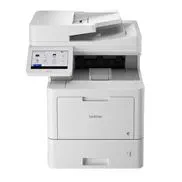
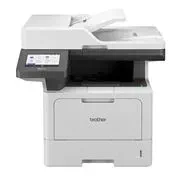
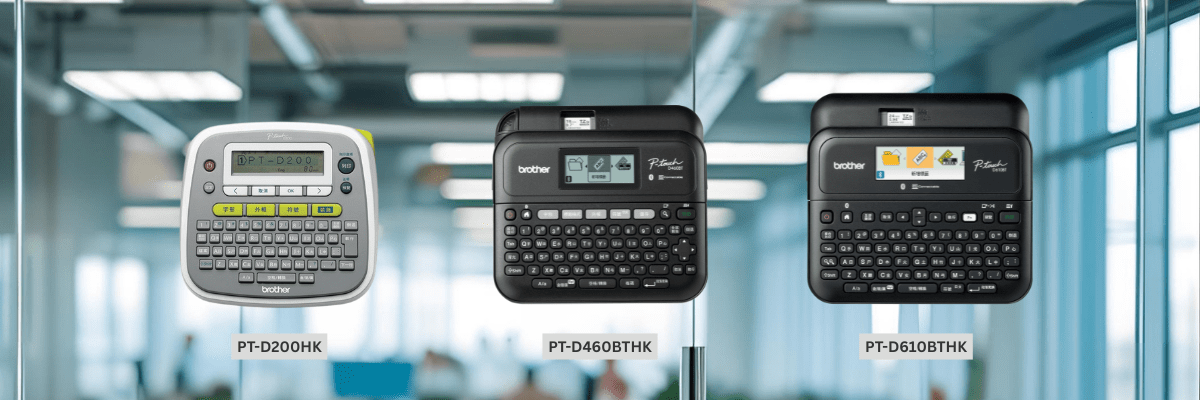
    Printers, Multi-Function Centres, Facsimiles, P-Touch Labellers

2. Personal & Home (P & H) Company
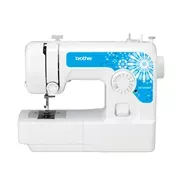
    Domestic sewing machines

3. Machinery & Solution (M & S) Company
    Industrial sewing machines, Machine tools

The Printing & Solutions (P&S) business is committed to the advancement of printing technologies. The P&S offers business solutions designed to fit perfectly in the SOHO (Small Office Home Office) environment and in departmental work groups in larger companies, designing products that help streamline workflow and add efficiency and convenience.

The Personal & Home (P&H) company mission is to offer to customers Brother's sewing and embroidery products that are fun, easy to use and can provide a myriad of ways to enhance their creativity.

The Machinery & Solution (M&S) business offers customers "solutions" that meet and exceed the needs of their production sites through industrial sewing machines and machine tools.While remaining steadfast in its tradition and spirit of “manufacturing,” Brother pledges to continue to create and quickly deliver superior value to Brother's customers through our high quality products and services.


7. Milestones

View
All

2004
2006

1998
2003

1992
1997

1908
1991

1908

Kanekichi Yasui established Yasui Sewing Machine Co.

1928

Started sales of industrial sewing machines.

Brother brand established.

1932

Brother succeeded in the mass production of domestic sewing machines.

1934

Nippon Sewing Machine Manufacturing Co. (now Brother Industries, Ltd.) was established in Japan.

1954

A regional sales company, the first overseas sales affiliate, was established in America.

1958

1958 A regional sales company was established in Europe.

1961

The production of portable typewriters began.

Brother entered the fields of business machines and machine tools.

1962

Corporate name changed to Brother Industries, Ltd.

1963

Stock listed in the Tokyo Stock Exchange, Osaka Stock Exchange, and Nagoya Stock Exchange.

1971

Production of the world's first high-speed dot-matrix printer began.

1977

A Brother sales company is established in Australia

1979

Taiwan Brother Industries, Ltd. started production of domestic sewing machines.

1980

Production of electronic office typewriters began

1984

Brother celebrated the 50th anniversary of its incorporation.

Brother typewriters named the first official typewriters for the 1984 Los Angeles Olympic Games.

1985

Brother Industries (U.K.) Ltd. began production of electronic typewriters.

Production of CNC tapping centre began.

1987

Brother entered the communications equipment market.

Production of laser printers and fax machines began.

1988

Production of labelling systems began.

1989

Brother International Singapore Pte. Ltd. was established.

Production of information equipment parts started, at Brother Industries Technology (M) Sdn. Bhd. in Malaysia.

1991

The Brother group obtained its first ISO 9002 certification.

1993

Brother started sponsorship of annual Brother Cup International Young Fashion Designer Contest.

Zhuhai Brother Industries, Co, Ltd. began production of domestic sewing machines in China.

1994

Production of fax machines commenced in Malaysia.

Brother's 30 millionth typewriter came off the production line.

1995

Brother became the first to launch a laser Multi-Function Centre (MFC) into the international market.

1996

Brother Industries (U.K.) Ltd. acquired its first ISO 14001 certification.

1997

Brother became an Official Supporter of the International Olympic Committee.

Brother Singapore set up its subsidiary office in Bangkok, Thailand.

1998

Brother started sponsorship activity of Formula One racing team.

1999

Brother became the first fax machine manufacturer to obtain an approval for the Pan-European communications standard.

Brother Singapore set up Dhaka Liaison office in Bangladesh.

Brother International (H.K.) Ltd. established in Hong Kong.

2000

Brother marked its production of 30 million domestic sewing machines.

Brother recorded its production of 10 million electronic labelling systems.

Brother Singapore set up its subsidiary offices in Kuala Lumpur, Malaysia, and in Manila, Philippines.

2001

Brother produced the 20,000th CNC tapping centre.

2002

Brother's Fax/MFC machines production reached 20 million units.

Brother became the first printer manufacturer to achieve the coveted TCO standard, a globally recognised benchmark for excellence in ecology, energy, emissions and ergonomics.

2003

Brother Industries (Shenzhen) Ltd. began production of MFCs.

2004

Brother Singapore set up its representative office in Jakarta, Indonesia.

Brother marked shipment of 10 millionth Laser Product.

Brother announced the first Dot-Matrix Replacement Laser Printer Series.

Developed the revolutionary Capillary Tube Delivery Ink System for colour inkjet MFCs.

Became the world's 1st vendor to provide a razor-sharp resolution of 1,200 x 6,000dpi photo quality output for inkjet MFCs. 

2005

Brother Singapore set up representative office in Ho Chi Minh City, Vietnam.

Brother exhibited the Brother Zone at the 2005 World Exposition, Aichi, Japan.

Brother (China) Ltd. Was

2006

Brother developed a new range of inkjet MFCs incorporating 1.5pl (picolitre) ink droplet technology coupled with Innobella™ genuine consumables for high quality prints.

2008

Brother celebrates the 100th years Anniversary.